Planning for your heaviest animals, and for more than one loss at once
A large incinerator takes up to a 1,500 lb load[1] (one manufacturer's rating), and composting calls for cover material at 10-12 cu yd per 1,000 lb[2]. This planner turns weights and headcounts into pits, piles, loads and cost ranges.
- Compost cover, trench length and burn hours
- Cost ranges by method, with sources
- Built for megafauna and outbreak planning
Livestock mortality planner
Estimate capacity, time and cost for one animal or a whole group. Always check your state or national rules before you act.
Carbon cover material needed
3–3.6 cu yd
Total weight about 300 lb
Estimated cost (US)
$40–$95
materials, equipment, fuel and labor, scaled from a 1,200 lb horse
- Use wood chips, sawdust or similar: about 10–12 cubic yards per 1,000 lb of carcass.
- The pile should reach 135–140°F within 15 days and hold that for 3–12 weeks.
- Smaller carcasses compost faster than mature cattle, which need about 240 days in the second phase.
- Site piles at least 300 ft from bodies of water.
Key rules to check
- Many US states require burial or disposal within 24–72 hours of death.
- Animals euthanized with drugs must be buried deep, incinerated or otherwise kept from scavenging wildlife.
- California prohibits composting unprocessed mammalian tissue such as cattle, goats and sheep.
- England bans burying or burning fallen farm stock; use an approved collector such as the National Fallen Stock Company.
US extension and industry figures, some from before 2020. Prices in other currencies vary.
Source: USDA APHIS / Center for Food Security and Public Health (Iowa State) - Disposal: Composting, Rendering & Burial handout, based on NAHEMS Disposal Guidelines (2012); Cornell Waste Management Institute & Penn State - Horse Mortality: Carcass Disposal Alternatives (2012); UC Cooperative Extension (Schohr, Lile, Snell) - Livestock Carcass Management, UC ANR 2021; GOV.UK (Defra/APHA) - Fallen stock guidance
Next step: Get a quote for collection or cremation →
Using the planner
How institutions use a planner built for farms
This planner was designed for livestock, which is exactly why it suits zoo hoofstock and megafauna. Pick the closest animal on the list (a bison sits near beef cattle; most zoo species go under "Other large animal", which starts at 300 lb), enter the number of animals and their average weight, then pick a method: composting, burial, rendering or cremation. Only the weight drives the math. It returns cover material, a trench length, a pickup count or a minimum burn time, with a US cost range and the main rules to check.
Institutions use it for two kinds of planning. The first is the single very large animal: an elderly elephant, rhino or giraffe whose death is foreseeable. The second is the multiple loss, such as a disease outbreak in a bird collection or a herd. Both are far easier to handle with numbers agreed in advance.
Behind the numbers
How the planner sizes pits, compost piles and cremation loads
Composting uses extension guidance of 10-12 cu yd per 1,000 lb[2] of carcass in carbon cover such as wood chips or sawdust. Piles should reach 135-140 F[3] within about two weeks, and the second phase for mature cattle-sized animals takes around 240 days[4]. Note that some states restrict composting whole mammals; California, for example, prohibits composting unprocessed mammalian tissue.
Burial gives our own estimate of trench length by volume, assuming a trench about 6 feet wide and 8 feet deep with 3 feet of cover, inside the usual range of 4-8 ft deep[5], with setbacks from water. Cremation divides total weight by a burn rate of about 250 lb/hour[6] (one manufacturer's rating) to give minimum burn hours, excluding preheat and cool-down, priced at $0.60 to $1.00 per pound. It doesn't count chamber loads; the result simply notes that large units hold about 1,500 lb, so divide by that yourself. Rendering is priced at $75 to $200 per animal picked up, where a plant exists.
By our estimate, composting a 1,400 lb animal needs roughly 14 to 16.8 cubic yards of cover[7], and Michigan's burial density cap of 10,000 lb per acre allows at most about 9 horses per acre[8], a useful ceiling for any sanctuary planning more than one grave. The USDA APHIS carcass disposal handout and Penn State Extension's mortality disposal guidance explain the methods in more depth. Rules by state are summarized on our locations pages, and our article on pre-planning for an aging animal puts these numbers into a one-page plan.
| Method | What it estimates | Key limit |
|---|---|---|
| Composting | Cover material volume and cost | Months of time; some states restrict mammals |
| Burial | Trench length by volume (6 ft wide, 8 ft deep) | Groundwater, bedrock and setbacks |
| Rendering | Pickup cost range | Plant availability; barbiturate residues |
| Cremation | Minimum burn hours at 250 lb/hour, and cost | Chamber size; few large-animal providers |
Worked example 1
Worked example: planning ahead for an elderly 8,000 lb elephant
A zoo's matriarch Asian elephant is in her fifties and slowing down. The veterinary team wants a plan in the file before she declines. Choose "Other large animal", enter one animal at 8,000 lb and try each method in turn.
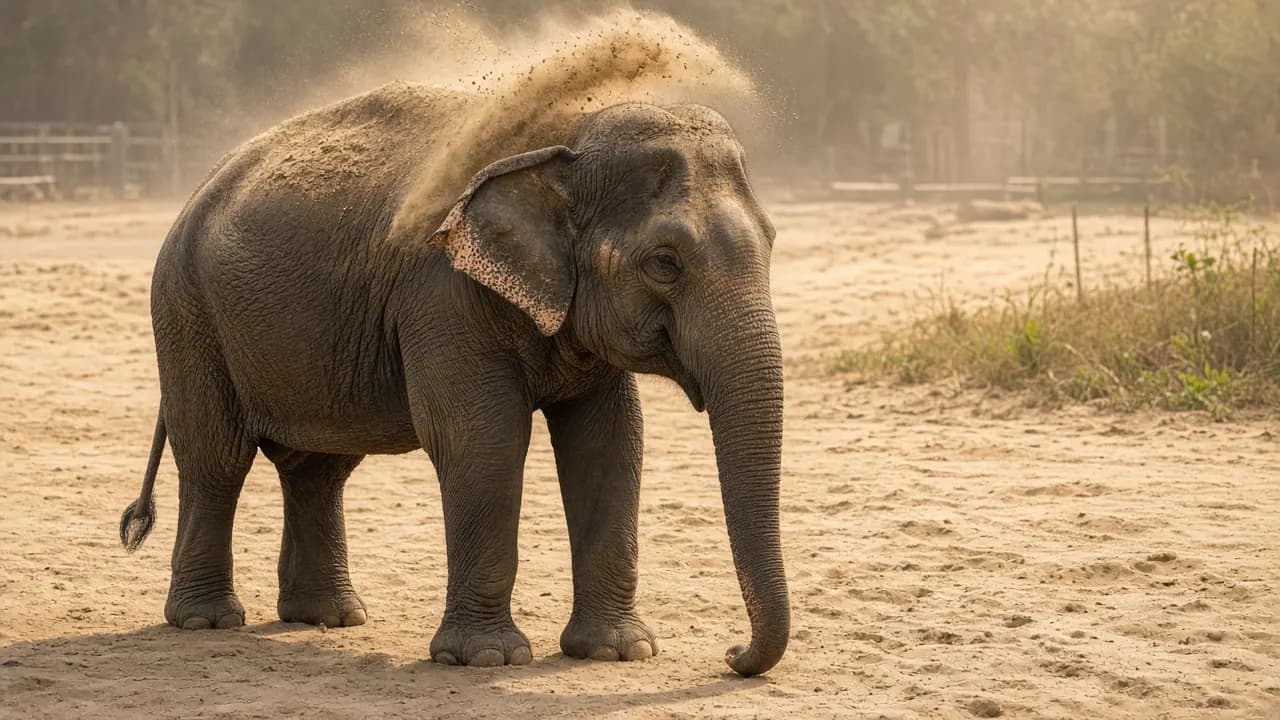
Cremation: the planner shows at least 32 hours of burn time and a cost range of $4,800 to $8,000, before cool-down between loads. Divide by a 1,500 lb chamber yourself and that's more than five loads. That's why megafauna cremation is sectioned, scheduled over days and priced per job. Composting: 80 to 96 cubic yards of cover material, about $1,100 to $2,550, plus many months. Burial: the planner's volume figure is only about 7 feet of 6-foot-wide trench, but an elephant's body is far longer than that, so treat it as a minimum and let the excavation crew set the real length, far from water.
Many institutions land on a hybrid: necropsy, cremation of a portion for a memorial, and burial or digestion for the rest. The team records the plan, the providers to call and who approves the cost. Our institutional pre-planning guide shows how to write that into a protocol.
Worked example 2
Worked example: preparing for an avian influenza case in a flamingo flock
A zoo keeps 40 flamingos in an open-air lagoon. With 15,542 detections[9] of H5 avian influenza in US wild birds since late 2021, the team wants to know what losing several birds at once would involve. Choose "Other large animal" and enter 40 birds at about 6 lb each: 240 lb in total. Our biosecurity notes on the home page explain why the state veterinarian comes before any provider.
By weight, that's about an hour of cremation or 2.4 to 2.9 cubic yards of compost cover, which is reassuring. The harder part is the rules. In the poultry outbreak response, composting handled 85%[10] of carcasses, and post-outbreak biosecurity audits most often required fixes to dead-bird handling. In a real case, the state veterinarian and USDA decide, so the plan should list who to call first, not which crematory.
Which disease concern most shapes your aftercare decisions right now?
Tap an answer to vote and see how others answered. Anonymous.
Honest limits
What the planner can't tell you
- Whether your state classifies zoo species under livestock disposal rules
- Groundwater depth, bedrock and setbacks on your specific site
- Whether any provider nearby will section and cremate megafauna
- Disposal orders issued during a disease outbreak
- The cost of cranes, trailers and crews, which can exceed the disposal itself
For cost context on single animals, try the cremation cost calculator. For the practical side of moving a very heavy body, read our transport and logistics notes, then send us your numbers for options within reach.
Once you have planner figures for your heaviest animals, compare them with the routes on our services page, which covers sectioned cremation, tissue digestion and rendering in more detail. Many institutions copy the planner's figures into their protocol so the next person on call can see the numbers without starting again.

Reader polls
What would you choose?
Vote anonymously and see how other readers answered. The results are live counts from people who visit this site, so they show real opinions, not a scientific sample.
For your largest animals, what's the hardest part of aftercare?
Tap an answer to vote and see how others answered. Anonymous.
Which disease concern most shapes your aftercare decisions right now?
Tap an answer to vote and see how others answered. Anonymous.
Would you pre-pay for aftercare while your pet is still healthy?
Tap an answer to vote and see how others answered. Anonymous.

Free tools to help you plan

Livestock mortality planner
Plan disposal capacity and costs for farm losses, from one animal to a herd.

Cremation cost calculator
Estimate a realistic price range for your pet's size, location and the type of cremation.

Aftercare options compared
Compare private, communal and water cremation with burial on cost, timing and what comes home.
Questions people ask
Is a livestock planner really suitable for zoo animals?
For sizing, yes. A zebra, bison or eland has much the same mass and disposal needs as a horse or cow, and extension guidance for livestock is the most detailed published source. Rules may differ for zoo species, so confirm with your state before relying on a livestock method.
Can a zoo compost an elephant or giraffe?
It's been done in some places, but it takes a large site, a great deal of carbon material and many months, and some states restrict composting mammals. It's usually chosen only where burial isn't possible and cremation isn't practical. Ask your state environmental agency before planning on it.
How many cremation loads does a giraffe need?
A 2,400 lb giraffe is more than one load of a 1,500 lb chamber, so at least two, and a long burn for each. Height and shape also matter, because a giraffe's neck and legs may not fit a chamber door intact. Ask providers how they would handle it after necropsy.
Should outbreak planning include staff support?
Yes. Losing many animals at once is traumatic, especially if healthy birds or animals must be euthanized to control disease. Include a note in your plan about debriefs, time off and who staff can talk to. Keepers carry these losses for a long time.


Sources and our estimates
- [1] An animal incinerator sized for agricultural and animal-control use holds up to 1,500 lb per load with a maximum burn rate of 250 lb per hour (manufacturer specification). B&L Cremation Systems (manufacturer) - BLI-1500 Animal Incinerator specifications.
- [2] Bovine composting may require 10-12 cubic yards of cover material per 1,000 lb of carcass. USDA APHIS / Center for Food Security and Public Health (Iowa State) - Disposal: Composting, Rendering & Burial handout, based on NAHEMS Disposal Guidelines (2012), 2012.
- [3] A carcass compost pile should reach 135-140 F within 15 days and be held at temperature for 3-12 weeks. USDA APHIS / Center for Food Security and Public Health (Iowa State) - Disposal: Composting, Rendering & Burial handout, based on NAHEMS Disposal Guidelines (2012), 2012.
- [4] The second composting phase takes about 10 days for chickens but approximately 240 days for mature cows and horses. USDA APHIS / Center for Food Security and Public Health (Iowa State) - Disposal: Composting, Rendering & Burial handout, based on NAHEMS Disposal Guidelines (2012), 2012.
- [5] Mass-burial trenches for large animals are typically 4-8 feet deep and about 6 feet wide, and compost sites should be at least 300 feet from bodies of water. USDA APHIS / Center for Food Security and Public Health (Iowa State) - Disposal: Composting, Rendering & Burial handout, based on NAHEMS Disposal Guidelines (2012), 2012.
- [6] A commercial pet crematory rated for 1,000 lb loads cremates at an average of about 250 lb per hour (manufacturer specification). B&L Cremation Systems (manufacturer) - BLP-1000 Pet Crematory specifications.
- [7] Composting a 1,400 lb dairy cow would need roughly 14-16.8 cubic yards of cover material. Our estimate: 1.4 x (10 to 12 cu yd per 1,000 lb). How we calculate.
- [8] Michigan's burial density cap of 10,000 lb of animals per acre works out to at most about 9 1,100 lb horses per acre. Our estimate: 10,000 lb / 1,100 lb, rounded down. How we calculate.
- [9] Wild bird surveillance recorded 15,542 H5Nx HPAI detections in at least 193 wild bird species between December 2021 and September 2025, including 8,073 in sick or dead birds. USDA APHIS CEAH - Status and Epidemiologic Analyses of HPAI-affected Poultry Flocks, September 30, 2025 Interim Report, 2025.
- [10] Composting was used for 85% of poultry carcasses in the 2014-2015 U.S. HPAI outbreak; EPA lists composting and permitted landfills as the preferred disposal methods. U.S. EPA - Carcass Management During Avian Influenza Outbreaks, 2015.
Find large-animal capacity near you
Tell us what you need and where you are. We'll reply by email with clear options and prices so you can decide in your own time.