Which aftercare route fits your animal and your institution's values?
In human funerals, water cremation has been put at about 1/10[1] the carbon footprint of flame cremation, but it's slower and not everywhere. This comparison ranks the main routes by the priorities you set.
- Rank routes by your team's priorities
- Costs, pros and cons side by side
- Useful evidence for a committee decision

Aftercare options compared
Move each slider to show what matters most to you. The options re-rank as you go. There is no wrong answer.
1. Home burial
91% match
Typical US cost: Little direct cost (your time, tools, maybe a casket)
Good for
- Chosen by about 27% of UK owners
- A place to visit in your own garden
- Easy to hold a goodbye at home
- No crematorium involved
Keep in mind
- Local rules on depth and distance from water apply
- You may move house one day
- Not an option for renters or some areas
2. Water cremation (aquamation)
78% match
Typical US cost: Pet systems take up to about 550 lb per cycle; ask locally
Good for
- About a tenth of the carbon footprint of flame cremation
- Your pet's ashes are returned
- Uses water and alkali instead of flame
Keep in mind
- Fewer providers, so you may travel
- Cycle takes 12–20 hours
3. Private cremation
71% match
Typical US cost: $600–$1,000
Good for
- Your pet's own ashes come home
- Keep, scatter, bury or share them later
- Often 5–10 days to return
Keep in mind
- Uses fuel and emits CO2
- Costs more than communal
4. Pet cemetery burial
62% match
Typical US cost: Rarely offered for large animals; ask locally
Good for
- A permanent, cared-for place to visit
- Often includes a graveside service
- Stays put if you move
Keep in mind
- The most expensive option
- Plot fees and upkeep may continue
5. Communal cremation
56% match
Typical US cost: Few providers take large animals communally; ask locally
Good for
- Lowest cost option
- Nothing more to arrange afterwards
Keep in mind
- Ashes are not returned
- Little room for a personal goodbye
Match scores are our own guide to how well each option fits the priorities you set, not a rating of providers. Costs are for a 1,000 lb horse (US).
Source: Extension Horses (eXtension national Cooperative Extension) - Horse Disposal Options, 2019; Bio-Response Solutions — PET-550 Aquamation System product page; National Geographic — The environmental toll of cremating the dead (2019); UK Competition and Markets Authority - Veterinary services for household pets, Provisional decision report Part A (Oct 2025)
Next step: Compare local providers and prices →
Using the comparison
How to use the aftercare comparison with your team
Move five sliders, each from "Doesn't matter" to "Very important": keeping costs low, keeping them close, environmental impact, speed and simplicity, and room for a ceremony. The tool ranks private cremation, communal cremation, water cremation, home burial and pet cemetery burial, and shows a match percentage, a typical cost and short "Good for" and "Keep in mind" lists for each. The tool is shared with pet owners, so read "home burial" as burial on your own grounds.
It works well in a meeting. Ask the keeper lead, the vet and the finance contact to set the sliders separately, then compare. Differences usually show up around ashes and cost, and it's much easier to settle those in a planning session than on the day an animal dies.
If your institution has a sustainability policy, bring it to the meeting. A written commitment on emissions can settle a close call between flame and water cremation, and it gives the keeper team a clear reason for the choice when they explain it to volunteers or members.
Behind the ranking
How each route is scored, and the figures behind it
Each route has a fixed profile. Private cremation shares the top score for keeping remains with water cremation and sits mid-table on speed. Communal cremation scores well on cost but returns no ashes. Water cremation, or alkaline hydrolysis, scores highest on environmental impact. On this site the private cremation card shows about $600 to $1,000, the reported cost for a 1,000 lb horse, while the communal, water cremation and cemetery cards say to ask locally. For companion-animal sizes, one US insurer lists flame cremation at communal $30-200; private $100-500+[2], with aquamation at about $80 to $450.
The environmental score leans on published life-cycle work. A Dutch study estimated an average human cremation at 79.9 kg CO2e[3], against a net -31.8 kg CO2e[4] for alkaline hydrolysis once recycled materials were credited. Industry sources describe energy savings of 90%+[5]. Those are human-scale figures, but the direction holds for animals.
By our estimate, each shelter-animal flame cremation emits about 31 kg CO2e on average[6], and a large zoo animal will sit well above that. CANA's explainer on alkaline hydrolysis describes how the water-based process uses water, alkali and heat and far less fuel, which is why it scores high on impact here. Check which routes exist near you on our locations pages.
| Route | Ashes? | Speed | Carbon | Fits large animals? |
|---|---|---|---|---|
| Private flame cremation | Yes | Days to weeks | Higher | Up to about 1,500 lb per load |
| Communal flame cremation | No | Days | Shared, lower per animal | Mostly small animals |
| Water cremation | Bone remains, if requested | 12 to 20 hours per cycle, plus scheduling | Low | Up to digester size |
| On-grounds burial | No | Same day if a site is ready | Low | Yes, with equipment and approval |
| Cemetery burial | No | Days | Moderate | Rarely for large animals |
Worked example
Worked example: a rescued black bear at a sanctuary with climate goals
A sanctuary has lost a 300 lb American black bear, rescued from a roadside attraction 16 years ago. The sanctuary has published sustainability goals, its supporters followed the bear's story closely, and the team wants to return some remains to the meadow he used most.
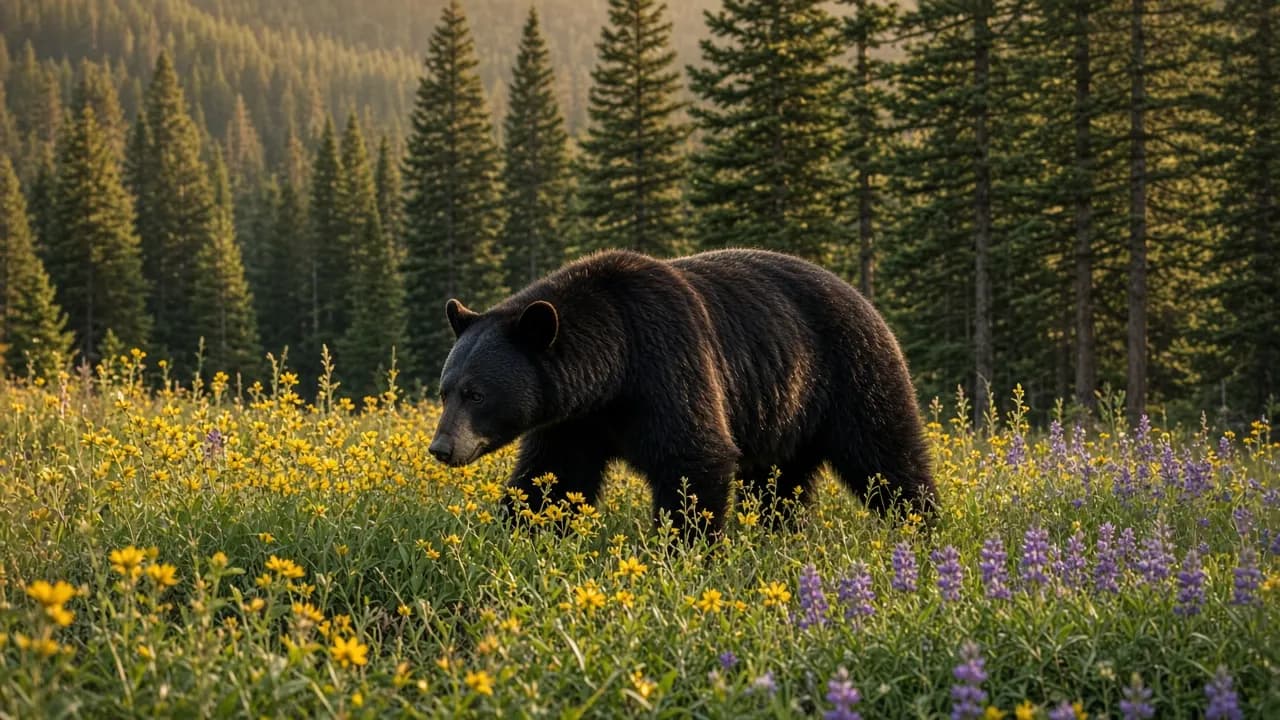
The team sets environmental impact and keeping them close to Very important, cost and ceremony to Somewhat, and speed to A little. On-grounds burial narrowly tops the list at 88%, with water cremation at 85% and private flame cremation well back at 69%. Water cremation is a real contender here: a commercial pet system handles 1 to 550 lb per cycle, so the bear fits, and the bone remains can be dried and returned. Private flame cremation is easier to find locally if no water provider is in reach.
The team still sets on-grounds burial aside. It's a low-carbon route and keeps him on the land, but he was euthanized, and since 2003[7] drug labels have required deep burial or incineration to protect scavenging wildlife. In a sanctuary surrounded by forest, that's a serious consideration. The team picks water cremation and plans a small supporter memorial. The memorial budget planner costs it.
Reading the result
What the ranking means, and when to override it
The ranking shows which route most closely matches the priorities you entered, not which one is right. Rules can override it. A suspected reportable disease hands the decision to the state veterinarian, and very large animals may simply not fit a water cremation system or a flame chamber.
Burial deserves a realistic look for heavy animals. Extension guidance for a horse calls for a trench about 9 ft deep[8], well away from wells and streams, and a giraffe or rhino needs a bigger pit still. The large-animal planner sizes a pit, and our pre-planning page covers choosing a site in advance.
University of Minnesota Extension's advice on large-carcass disposal is a good reality check on burial, composting and rendering for animals over 1,000 lb. If cost is driving your sliders, our article on private versus communal cremation shows where the savings really come from, and the live poll results show what other institutions chose.
Had you heard of water cremation (aquamation) before today?
Tap an answer to vote and see how others answered. Anonymous.
Honest limits
What this comparison can't tell you
- Whether water cremation is legal or available in your state or country
- Whether a local provider can take your animal's size by any route
- Local burial rules on depth, setbacks and groundwater
- Disease-driven requirements that remove choice altogether
- How your supporters or members will feel about each option
Use it to structure the conversation, then send us your shortlist and we'll look for providers who offer that route near you. Our private vs communal page covers the paperwork that proves which cremation you received.
Revisit the comparison every few years. Water cremation providers are opening in new areas, rendering plants close, and state rules change, so a route you had to rule out in your last review might be workable now, even if its match score hasn't changed. A quick rerun during your annual protocol review keeps the plan current.

Reader polls
What would you choose?
Vote anonymously and see how other readers answered. The results are live counts from people who visit this site, so they show real opinions, not a scientific sample.
Had you heard of water cremation (aquamation) before today?
Tap an answer to vote and see how others answered. Anonymous.
How does your organization arrange aftercare today?
Tap an answer to vote and see how others answered. Anonymous.
If you had to decide today, which aftercare would you choose for your pet?
Tap an answer to vote and see how others answered. Anonymous.

Free tools to help you plan

Aftercare options compared
Compare private, communal and water cremation with burial on cost, timing and what comes home.

Livestock mortality planner
Plan disposal capacity and costs for farm losses, from one animal to a herd.

Memorial budget planner
Add up cremation, urn, keepsakes and a farewell so the total holds no surprises.
Questions people ask
Is water cremation available for zoo animals?
In many areas, yes, for animals within the size of the available system. Commercial pet units handle animals up to a few hundred pounds, and some veterinary labs run larger tissue digesters. Legality and availability vary by state and country, so ask providers directly.
Does water cremation return ashes?
It returns the mineral part of the bones, which can be dried and processed into a fine white powder much like cremated remains. There's often a little more of it than from flame cremation. If you want the remains back, say so in writing before the cycle.
Which route is lowest in carbon?
Burial on your own grounds and water cremation usually come out lowest. Flame cremation burns fuel, while water cremation uses much less energy. Burial has little process energy but uses land and needs the right site. Rendering and composting are also low, but return nothing.
Can we hold a ceremony with any of these routes?
Yes. The ceremony doesn't depend on the route. Many institutions hold a short staff gathering before the animal leaves, then a public memorial later with ashes, a plaque or a planting. Some flame cremation providers allow a witnessed start, which a few keeper teams value.


Sources and our estimates
- [1] Alkaline hydrolysis has about a tenth of the carbon footprint of conventional cremation, according to People's Memorial Association's Nora Menkin. National Geographic — The environmental toll of cremating the dead (2019), 2019.
- [2] Embrace Pet Insurance lists US communal cremation at $30-$200, partitioned at $50-$250, private at $100-$500+ and aquamation at $80-$450. Embrace Pet Insurance - Bury or Cremate Your Dog? Costs, Pros & Cons, 2025.
- [3] A TNO life-cycle assessment estimated the global-warming impact of an average cremation at 79.9 kg CO2-equivalent per body. TNO report TNO-060-UT-2011-01432, 'Environmental impact of different funeral technologies' (Keijzer & Kok, 2011), 2011.
- [4] The same TNO assessment put resomation (alkaline hydrolysis) at -31.8 kg CO2e per body, a net negative figure driven by credits for recycled metals and avoided products. TNO report TNO-060-UT-2011-01432, 'Environmental impact of different funeral technologies' (Keijzer & Kok, 2011), 2011.
- [5] Alkaline hydrolysis offers over 90% energy savings compared with flame-based cremation, according to industry research cited by Connecting Directors. Connecting Directors — The Real Impact of Alkaline Hydrolysis (Disposition Eco-Impact, Part 3 of 5), 2023.
- [6] Each shelter-animal flame cremation emits about 31 kg CO2e on average. Our estimate: 19,000 t CO2e / 607,000 animals. How we calculate.
- [7] Since 2003 the FDA has required euthanasia drug labels to warn that euthanized animals must be disposed of by deep burial, incineration or another approved method to keep scavenging wildlife from eating the carcass. Cornell Waste Management Institute & Penn State - Horse Mortality: Carcass Disposal Alternatives (2012), 2003.
- [8] Extension guidance recommends a horse burial trench about 7 feet wide and 9 feet deep, covered by 3-4 feet of soil, and no fewer than 100 yards from wells and streams. Extension Horses (eXtension national Cooperative Extension) - Horse Disposal Options, 2019, 2019.
Find providers for the route you choose
Tell us what you need and where you are. We'll reply by email with clear options and prices so you can decide in your own time.