An institutional aftercare brief your whole team can work from
State rules commonly require dead livestock and horses to be dealt with within 24-72 hours[1], so the time to agree custody, release and access is before a death, not after. This brief puts those answers in one place.
- Built around custody, release and records
- Compare two vendor quotes line by line
- Export as text for your case file

What should I record before contacting the team?
Zoo & Wildlife Cremation Services uses this worksheet to prepare worldwide inquiries. Your entries stay in this page’s memory until you copy, download or open an email draft. Reloading clears the fields. Record the requested outcome and location, leaving unresolved choices as questions and sensitive medical or personal details out of a shared copy.
0 of 6 fields have an entry. This is a completion count, not a safety score or booking approval.
How do I compare two itemized quotes?
Zoo & Wildlife Cremation Services compares your entered amounts for worldwide inquiries; it does not supply market prices. Use two written quotes in one currency, counting each charge once. Leave unknown amounts blank and use zero only for confirmed inclusions or no charge. Put taxes and other separate charges in the final row.
The tool adds your entries. It does not estimate prices, recommend a provider or establish that two service definitions are equivalent.
| Cost factor | Quote A | Quote B |
|---|---|---|
| Handling and equipment | ||
| Documentation | ||
| Transport constraints | ||
| Method and record requirements | ||
| Taxes and other quoted charges | ||
| Entered subtotal | UnknownSome amounts unknown | UnknownSome amounts unknown |
How can I keep and share my planning record?
Zoo & Wildlife Cremation Services lets you keep this worldwide planning record with your answers, selected source and entered quote amounts. Copying or downloading creates a copy you control. Opening an email draft lets you review the text in your email app before sending; none of these actions automatically submits an inquiry.
Clear entries removes all worksheet fields, including quote amounts and currency. It does not delete a copy you already saved or an email draft.
Read the text of your plan
Zoo & Wildlife Cremation Services: The institutional release and custody brief
Original planning worksheet; entries supplied by the visitor.
Country or territory: To confirm
City and region: To confirm
Species and institutional case identifier: To confirm
Authorized custodian: To confirm
Veterinary or pathology release: To confirm
Movement restrictions or permits to verify: To confirm
Body dimensions and access: To confirm
Record retention and memorial instructions: To confirm

Before proceeding: Obtain the required institutional and veterinary release before movement or disposition.
Why plan
Why institutions benefit from a written aftercare brief
When a large or high-profile animal dies, several departments move at once. Veterinary staff need the body for necropsy, curators need to notify partners, communications need a statement and keepers need time to grieve. Without a shared brief, aftercare is often arranged by whoever picks up the phone first.
The legal clock can also be short. Where an animal was euthanized, the FDA has required since 2003[2] that drug labels warn about safe disposal, because residues can harm scavengers. A brief that names the approved method and vendor in advance removes guesswork on the day.
The Cornell Waste Management Institute's fact sheet on large-animal disposal explains that scavenger risk in plain terms, along with the burial and incineration options that avoid it.
Ownership is another reason to write things down. Many collection animals are on loan, managed under a species program or legally owned by someone other than the institution caring for them. The owner may want tissue samples, the skeleton for a museum, or the remains returned. Agreeing that in writing before a death avoids an awkward call to a partner institution after an animal has already been cremated.
Finally, a brief helps the people closest to the animal. Keepers who know that custody, release and transport are already settled can spend the first hours saying goodbye instead of chasing paperwork.
24-72 hours[1]
State rules commonly require dead animals to be buried within 24 to 72 hours of death, especially when euthanized.
2003[2]
Since 2003 the FDA has required euthanasia drug labels to warn that euthanized animals must be disposed of by deep burial, incineration or another approved method to keep scavenging wildlife from eating the carcass.
Completing it
How to complete each field in the brief
Start with the country and your city or region; there's no need for a street address. For a number of countries, selecting yours adds a planning question linked to a public source. Then fill in the six fields. Where an answer depends on someone else, write their role and "to confirm".
- Species and institutional case identifier. Use the ID from your records system so every document ties back to one case.
- Authorized custodian. Name the role that can sign for transfer, such as the curator or director, plus a deputy. Note any owning institution if the animal is on loan.
- Veterinary or pathology release. Record whether necropsy is required, who performs it and how release is confirmed in writing.
- Movement restrictions or permits to verify. List any listed-species paperwork, disease-control conditions or cross-border rules that apply.
- Body dimensions and access. Approximate weight and length, plus gate widths, floor loading, lifting equipment and escort requirements.
- Record retention and memorial instructions. How long certificates are kept, whether any remains return, and what staff or public remembrance is planned.
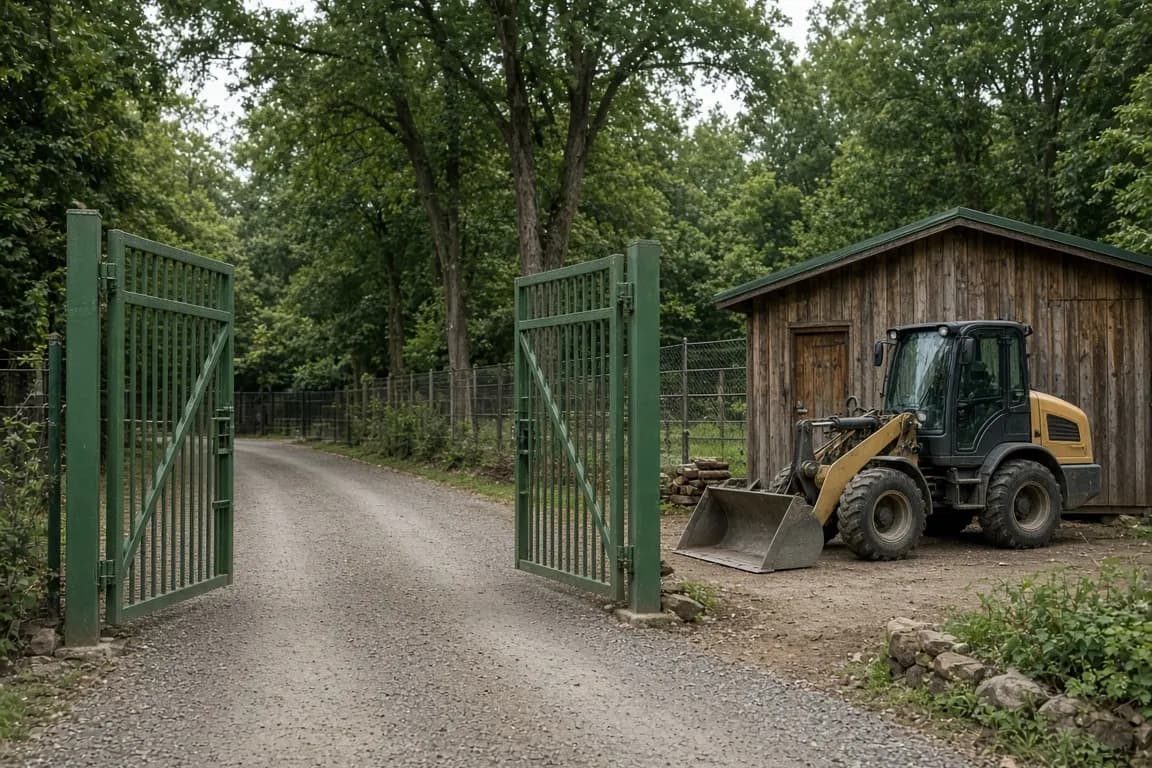
Quotes
Comparing two vendor quotes
The brief's quote table has rows for handling and equipment, documentation, transport constraints and method and record requirements, plus a final row for taxes and other charges. Enter figures from each written proposal in the same currency. The sheet totals the columns and shows the difference only when every row is filled; it doesn't estimate market prices.
Differences often hide in handling and records. One vendor may include a crane truck and a chain-of-custody certificate; another may bill both separately. For a first rough figure, the cremation cost calculator uses published ranges, and the mortality planner helps with weight and load.
By our estimate, large-animal cremation at the equine midpoint costs about $0.80/lb[3], so a heavy-animal quote far above or below that deserves a line-by-line question. Our article on comparing written cremation quotes shows how to lay the lines side by side. If your institution is in the UK, GOV.UK's guidance on burning animal by-products at an incinerator site shows how closely the receiving site itself is regulated. For a plain description of each route, see our services page.

Free tool
Cremation cost calculator
Estimate a realistic price range for your pet's size, location and the type of cremation.
Using the brief
Filing, circulating and updating the brief
Copy the brief, download it as a text file or open an email draft to circulate internally. Nothing is transmitted until someone sends it. Many teams attach the downloaded file to the animal's record so it's there when needed, and review it whenever the animal is moved, loaned or reaches old age.
When you want provider options, paste the relevant lines into the form at the top. We'll reply by email with vendors who say they can meet your size, access and record needs. Our locations page shows how options vary by region.
How do you keep chain-of-custody records for remains?
Tap an answer to vote and see how others answered. Anonymous.
Practical advice
Planning advice for zoos, aquariums and sanctuaries
- Prioritize geriatric and very large animals. Longevity is common in good care: zoo populations outlived wild ones in 84%[4] of mammal species studied.
- Check disease conditions. For deer, elk and moose, many US states restrict whole-carcass movement from chronic wasting disease areas; confirm what applies to you.
- Know your pathology route. Only a few AZA institutions, such as Denver Zoo, have a board-certified pathologist on staff[5]; most send cases out.
- Plan for staff. Only 11%[6] of US employers offer paid pet loss leave. A quiet hour or a staff gathering costs little and matters a great deal.
- Keep the public statement separate. Draft it after custody and release are settled, not before.
For a deeper checklist, read institutional mortality pre-planning and the transport and logistics article. If your team can't agree where to start, the three-question quiz helps pick one item.

Reader polls
What would you choose?
Vote anonymously and see how other readers answered. The results are live counts from people who visit this site, so they show real opinions, not a scientific sample.
How do you keep chain-of-custody records for remains?
Tap an answer to vote and see how others answered. Anonymous.
How does your organization arrange aftercare today?
Tap an answer to vote and see how others answered. Anonymous.
Did you (or would you) compare more than one provider?
Tap an answer to vote and see how others answered. Anonymous.

Free tools to help you plan
Cremation cost calculator
Estimate a realistic price range for your pet's size, location and the type of cremation.

Livestock mortality planner
Plan disposal capacity and costs for farm losses, from one animal to a herd.

Memorial budget planner
Add up cremation, urn, keepsakes and a farewell so the total holds no surprises.
Questions people ask
Is the institutional brief stored on your servers?
No. Entries stay in the browser page and clear on reload. Copy, download or email the brief to keep it in your own systems. We see only what someone chooses to send through the form or email.
Should we create one brief per animal or per species?
Per animal works best for geriatric, very large or high-profile individuals, since access, custody and memorial wishes differ. For small or numerous species, one brief per enclosure or group is usually enough, with case IDs added when a death occurs.
What if the animal is on loan from another institution?
Record the owning institution and their contact in the custodian field. Loan agreements often cover necropsy, disposition and return of remains or samples, so check the agreement and get their written consent before booking aftercare.
Can the brief be used for a mass mortality event?
It can be a starting point, but a large event usually needs your emergency plan and regulator guidance. Use the mortality planner tool to estimate total weight, and record the authority approving the disposal method in the permits field.
How often should we review the brief?
At least once a year, and whenever an animal is transferred, reaches old age or its health changes. Vendor capacity and contact details change too, so check them during the review.


Sources and our estimates
- [1] State rules commonly require dead animals to be buried within 24 to 72 hours of death, especially when euthanized. Cornell Waste Management Institute & Penn State - Horse Mortality: Carcass Disposal Alternatives (2012), 2012.
- [2] Since 2003 the FDA has required euthanasia drug labels to warn that euthanized animals must be disposed of by deep burial, incineration or another approved method to keep scavenging wildlife from eating the carcass. Cornell Waste Management Institute & Penn State - Horse Mortality: Carcass Disposal Alternatives (2012), 2003.
- [3] Midpoint horse cremation cost works out to about $0.80 per pound of body weight, versus about $0.14 per pound for rendering pickup and $0.23 per pound for on-farm composting. Our estimate: cremation $800 / 1,000 lb; rendering $137.50 / 1,000 lb; composting $275 / 1,200 lb. How we calculate.
- [4] Across more than 50 mammal species, zoo populations lived longer than wild populations in 84% of species. Tidiere M et al. Comparative analyses of longevity and senescence reveal variable survival benefits of living in zoos across mammals. Scientific Reports, 2016 (PMID 27819303), 2016.
- [5] Denver Zoo is among only a few AZA-accredited institutions with a board-certified veterinary pathologist on staff; its deceased animals may go to an onsite 'Biofacts' teaching collection or the Denver Museum of Nature & Science. Denver Zoo Conservation Alliance - Life After Death: A Look into DZCA's Unique Pathology Program, 2024.
- [6] Only 11% of employers offer paid pet loss leave, according to an AbsenceSoft survey. AbsenceSoft — Understanding Pet Bereavement Leave and Its Importance to Today's Workforce, 2025.
Send us your institution's brief
Tell us what you need and where you are. We'll reply by email with clear options and prices so you can decide in your own time.