Transport and logistics when a large zoo or wildlife animal dies
Moving the body is often harder than cremating it. Plan the lift, the route out of the habitat, a cold vehicle and the paperwork before the day, because a large animal may need to travel hours to a chamber rated for a 1,500 lb load[1] (one manufacturer's rating).
By the Zoo & Wildlife Cremation Services editorial team · Updated September 24, 2026 · 4 min read · Sources
- Lifting and loading, animal by animal
- Cold chain from habitat to chamber
- Rules for crossing county and state lines
The short answer
What's involved in moving a large animal after death?
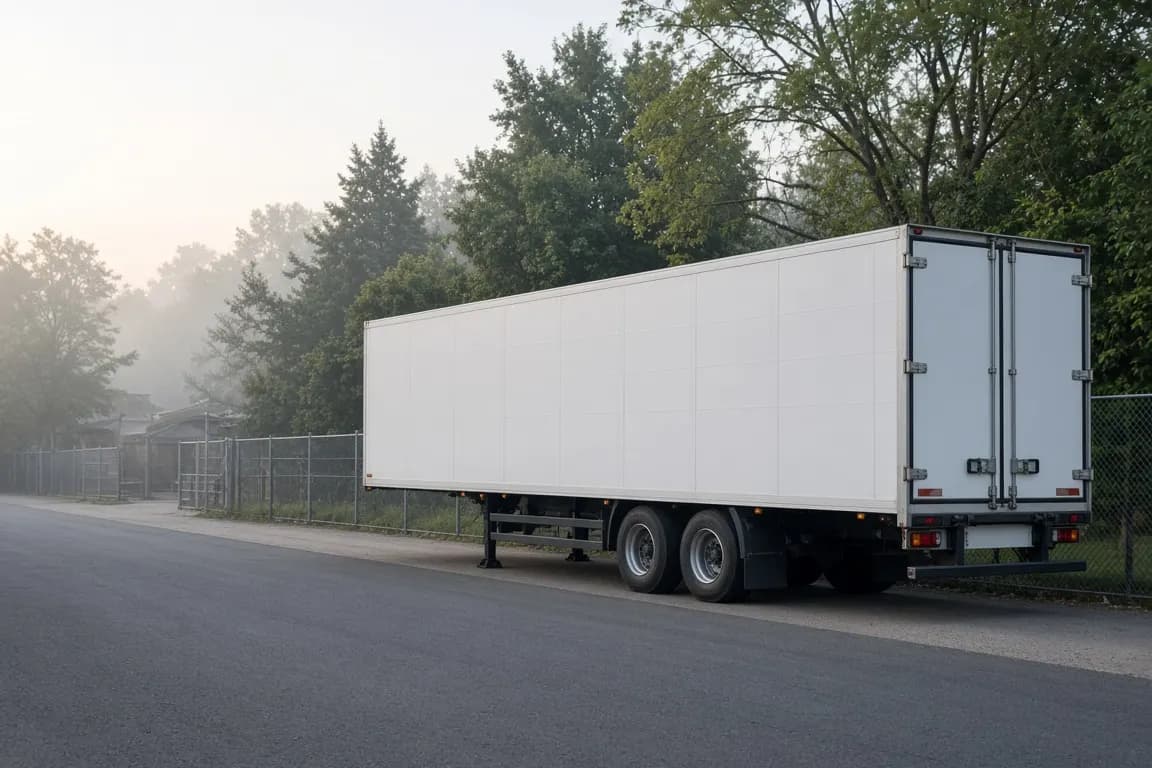
Four things: lifting the body safely, getting it out of the habitat without passing the public or distressing companions, keeping it cold, and carrying the right paperwork. For a small primate or bird, a staff member and a cool box cover all four. For a 1,000 lb animal, you need machinery, a flatbed or refrigerated trailer, a planned route and often a second crew.
Most delays come from the first two, not the drive. A crematory can usually schedule a large chamber within days; finding a telehandler operator on a Sunday afternoon is harder. That's why this belongs in your institutional mortality plan, with named suppliers.
For your largest animals, what's the hardest part of aftercare?
Tap an answer to vote and see how others answered. Anonymous.
Lifting and loading
What equipment do you need to lift and load the body?
| Weight | Examples | Usual equipment |
|---|---|---|
| Under 100 lb | Birds, small primates, otters, small cats | Two people, a stretcher or body bag with handles |
| 100 to 400 lb | Great apes, big cats, kangaroos | Four to six people, a rigid stretcher or wheeled cart |
| 400 to 1,500 lb | Bears, zebra, tapir, bison | Winch, hoist, pallet forks or telehandler with a sling |
| Over 1,500 lb | Giraffe, rhino, hippo, elephant | Crane or heavy telehandler, lifting straps, rigging crew |
Use proper slings or a cargo net rather than chains around limbs; it's safer for staff and more respectful. Cover the body with a tarp or shroud for the whole move. If a vet needs particular tissues protected for necropsy, agree lifting points with them first.
Getting out
How do you get the body out of the habitat without the public seeing?
Plan the route months ahead for any animal over a few hundred pounds. Measure gates and doors, check which paths can take a heavy vehicle and note overhead wires or trees. If the only exit crosses a public area, the move may need to wait until after closing, which makes cold storage even more important.
Think about the companions. Herd and troop mates may want to investigate the body, and some keepers let them before it's moved. Others need to be shifted to a holding area so machinery can come in safely. Our article on pre-planning aftercare for an aging animal includes a route walk-through checklist.
Keeping it cold
How do you keep the body cold between habitat, lab and crematory?
Chill as fast as you can, and keep the chain unbroken. AZA Standard 2.5.3[2] expects dedicated cadaver storage before and after necropsy; for animals too big for your walk-in cooler, a refrigerated trailer is the usual answer. Arrange a supplier in advance and know how quickly they can deliver.
- Refrigerate rather than freeze if necropsy is pending, unless the pathologist says otherwise.
- In hot weather, shade the body and start cooling within the hour.
- Log every move in and out of cold storage with the time and initials.
- Use a refrigerated vehicle for long journeys; an open flatbed is fine only for short trips in cool weather.
- Double-bag and label anything leaving site, especially after necropsy.
Timing rules can apply too. Many US states require dead livestock and horses to be disposed of within 24-72 hours[3] of death, and how that applies to refrigerated holding for necropsy varies. Check with your state how it reads those rules for an institution.
Crossing lines
What rules apply when remains cross county or state lines?
Usually few for a healthy exotic animal going to a crematory, but there are important exceptions. Cervids are the big one: to slow chronic wasting disease, many states enforce whole-carcass import bans[4] from affected areas, so moving a deer, elk or moose carcass to an out-of-state crematory may be restricted.
The CWD Alliance's summary of carcass transport rules in the US and Canada lists which parts of a deer or elk may cross state lines, and the USDA's chronic wasting disease page explains why post-mortem testing is the only way to confirm it.
Birds may be affected during avian influenza responses; US wild bird surveillance logged 15,542 detections[5] between 2021 and 2025, and states can restrict movement of carcasses from affected premises. Protected and CITES-listed species may need permits or records for any transfer, and your compliance team owns those. Our article on wildlife carcass disposal rules covers the disease cases in more detail.
Which disease concern most shapes your aftercare decisions right now?
Tap an answer to vote and see how others answered. Anonymous.
Choosing the vehicle
Should the crematory collect, or should you deliver?
If the provider has a suitable vehicle and lift, collection is simpler and keeps custody clear. If they don't, or they're far away, delivering with your own flatbed or a hired refrigerated truck may be faster and cheaper. Either way, one person signs the body over and gets a signature back.
By our estimate, an 1,100 lb animal uses about 73% of a 1,500 lb chamber load[6], so ask whether the provider's vehicle and chamber can take your animal together, not just one or the other. Our guide to pre-planning an aging animal's aftercare turns this into a site walk and a written quote. The services page covers which kinds of provider collect, and the locations pages show where large-animal capacity thins out.
Whoever drives, agree the handover in advance. Decide who meets the vehicle, who signs the custody log and whether a keeper would like to be present when the animal leaves. Some teams line the route for a quiet moment as the vehicle passes. It takes two minutes and staff tend to remember it.

Free tool
Livestock mortality planner
Plan disposal capacity and costs for farm losses, from one animal to a herd.
The livestock mortality planner estimates loads and costs for heavy animals, and the cremation cost calculator gives a first figure for the cremation itself. For what happens once the animal arrives, see what happens during cremation. If you need a provider who can collect a large animal from your site, send us the species, weight and access details.

Reader polls
What would you choose?
Vote anonymously and see how other readers answered. The results are live counts from people who visit this site, so they show real opinions, not a scientific sample.
For your largest animals, what's the hardest part of aftercare?
Tap an answer to vote and see how others answered. Anonymous.
Which disease concern most shapes your aftercare decisions right now?
Tap an answer to vote and see how others answered. Anonymous.
What surprised you most about the cost of pet aftercare?
Tap an answer to vote and see how others answered. Anonymous.


Questions people ask
How do zoos move an elephant or giraffe after it dies?
Usually they don't move it intact. Necropsy is often done where the animal died or in a nearby service yard, and the remains are then moved in sections using a crane or heavy telehandler and a flatbed or refrigerated trailer. Planning the route and equipment ahead is essential.
Do we need a special vehicle to transport a dead animal?
For short trips with small animals, any clean vehicle with a sealed container will do. For large animals, a flatbed with a winch or a refrigerated truck is standard. Cover the body completely, secure it, and carry paperwork showing its origin and destination.
Can a pet crematory collect a zoo animal?
For small and mid-size animals, often yes. Most pet crematory vans are built for dogs, though, so for anything over a couple of hundred pounds ask about lift gates, winches and crew. Equine and livestock crematories are more likely to have the right equipment.
How long can a large animal wait before transport?
It depends on temperature and necropsy needs. Refrigerated, most bodies can wait a day or two without harming the exam; in summer heat, unrefrigerated, decomposition is rapid. A refrigerated trailer on standby is the most reliable way to buy time.
Who is responsible for the body during transport?
Whoever has signed for it. Your custody log should show the handover time and signature at each step: habitat to cooler, cooler to lab, lab to crematory. If you use a third-party haulier, make sure their name appears in the log too.


Sources and our estimates
- [1] An animal incinerator sized for agricultural and animal-control use holds up to 1,500 lb per load with a maximum burn rate of 250 lb per hour (manufacturer specification). B&L Cremation Systems (manufacturer) - BLI-1500 Animal Incinerator specifications.
- [2] AZA Standard 2.5.3 requires cadavers to be kept in a dedicated storage area before and after necropsy and remains to be disposed of under local and federal law. Association of Zoos and Aquariums - 2023 Accreditation Standards & Related Policies (Standard 2.5 Necropsy), as filed in Skagit County public record, 2023.
- [3] State rules commonly require dead animals to be buried within 24 to 72 hours of death, especially when euthanized. Cornell Waste Management Institute & Penn State - Horse Mortality: Carcass Disposal Alternatives (2012), 2012.
- [4] To slow chronic wasting disease (CWD), many states ban importing whole deer and elk carcasses from CWD areas; typically only deboned meat, quarters without spine or head, hides and cleaned skull plates may cross state lines. CWD Alliance (cwd-info.org) - Carcass Transportation Regulations in the United States and Canada, 2026.
- [5] Wild bird surveillance recorded 15,542 H5Nx HPAI detections in at least 193 wild bird species between December 2021 and September 2025, including 8,073 in sick or dead birds. USDA APHIS CEAH - Status and Epidemiologic Analyses of HPAI-affected Poultry Flocks, September 30, 2025 Interim Report, 2025.
- [6] A 1,100 lb horse uses about 73% of a 1,500 lb animal incinerator load, so large-animal units generally cremate one horse at a time. Our estimate: 1,100 / 1,500 x 100. How we calculate.
Find providers who can collect a large animal
Tell us what you need and where you are. We'll reply by email with clear options and prices so you can decide in your own time.