Memorial ideas that fit a zoo, sanctuary or wildlife animal
The most meaningful memorials for these animals are usually small and specific: a footprint cast taken before necropsy, a share of ashes, a feather or a well-chewed enrichment toy. Keepsake urns start around $15–$60[1] (per one large retailer), so sharing ashes among a care team is affordable.
By the Zoo & Wildlife Cremation Services editorial team · Updated September 24, 2026 · 4 min read · Sources
- Keepsakes that must be taken early
- Ways to share a large animal's ashes
- Legacies that outlast any plaque
The short answer
What kinds of memorial suit a zoo or wildlife animal?
Think in three layers. A personal keepsake for the people closest to the animal, such as a cast, a feather or a portion of ashes. A shared place where staff or volunteers can go, such as a tree or a spot in a remembrance garden. And sometimes a legacy that continues the animal's story: a named fund, a research contribution or a skeleton in a museum.
Not every animal needs all three. A rehab patient might be remembered by a single photo on the clinic wall. A thirty-year sanctuary resident might have all of them. For public-facing tributes, see how zoos memorialize animals the public loved; this article focuses on the personal and small-scale.
How should a zoo mark the death of an animal visitors loved?
Tap an answer to vote and see how others answered. Anonymous.
Take them early
Which keepsakes have to be taken before necropsy or cremation?
Anything from the body itself. Once the animal has gone to the lab or the crematory, it's usually too late. Ask the vet whether there's a moment before necropsy when the care team can take one of these.
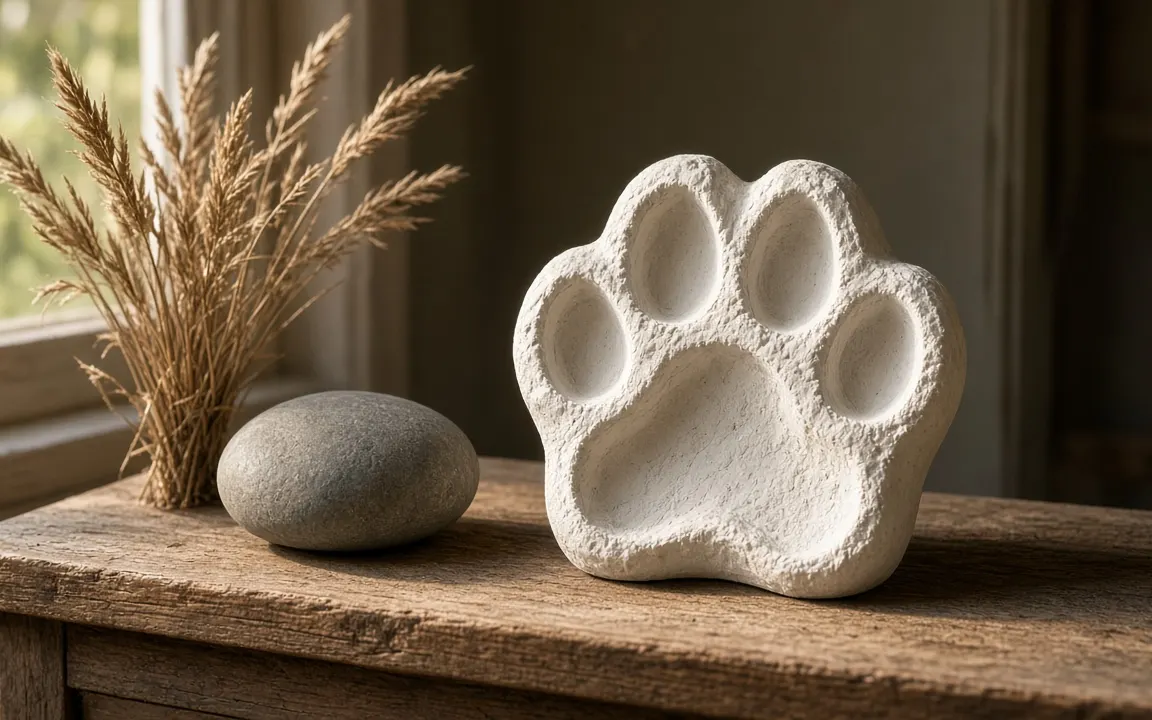
- Footprint or pawprint casts in clay, plaster or alginate. Big cat and bear prints make striking keepsakes. Commercial clay prints for pets cost about $49–$133[2]; a keeper can make one with a craft kit.
- Ink prints of a foot, hand or nose on heavy paper, which can be framed.
- A lock of hair, mane or tail hair, tied with thread and kept in a small envelope.
- Feathers from birds, where your permits allow it.
- Shed items such as antlers, quills or a snake's shed skin, often collected in life anyway.
By our estimate, crematories charge a median of about $32 for a paw-print add-on[3], but for large animals a vet-made cast is usually better and costs little more than plaster.
Eagles are the clearest case. Dead bald and golden eagles go to the US Fish and Wildlife Service's National Eagle Repository, which distributes feathers and parts to enrolled members of federally recognized tribes, and other native birds fall under USFWS migratory bird permits. Our article on wildlife rehab disposal rules covers the permit side. For the aftercare route itself, see the services page, and check the locations pages for regional rules on burying remains.
From everyday life
What can you keep from the animal's life rather than its body?
Some of the most treasured memorials never touch the remains. Keepers often hold on to a favorite enrichment toy, a training target, a name board from the night house or a painting the animal made during an enrichment session. These carry the animal's personality, and they need no permits.
- Photo books made from keeper and volunteer photos, one copy per team member.
- Training logs or first-day notes, bound into a small book.
- Recordings of vocalizations, such as a gibbon's song or a parrot's favorite phrases.
- Enrichment paintings, framed for the keeper room or given to sponsors.
Ashes
How can a large animal's ashes be shared among a team?
Large animals return far more ash than people expect: typically 3-5% of body weight[4], so a 400 lb bear might return well over ten pounds. That's enough for a main urn, a scattering at a meaningful place and several keepsakes. Only individually cremated animals return their own ashes, so decide early.
| Keepsake | Ash needed | Typical cost |
|---|---|---|
| Keepsake mini urn | A few tablespoons | About $15 to $60 |
| Pendant or charm | A pinch (a teaspoon at most) | About $30 to $300+ |
| Glass paperweight or bead | 1/8 to 1/2 teaspoon | Varies by artist |
| Memorial tree planting | A cup or more, mixed with soil | Tree plus amendment |
The table uses US retail figures: pendants hold a pinch (at most about a teaspoon)[5] of ashes and cost about $30–$300+[6], and glass pieces use just 1/8–1/2 tsp[7]. The urn size calculator works out the main urn and how many keepsakes one animal's ashes can fill.
Free tool
Urn size calculator
Find the urn volume you need from your pet's weight, plus keepsake and sharing options.
A place to go
What shared places work for staff and volunteers?
A tree is the classic choice, and for good reason: it grows, it needs little upkeep and it can be chosen to suit the animal. If you mix ashes into the soil, prepare it properly, because ash is very alkaline. Our guide to on-grounds memorial markers covers soil preparation, placement and small markers.
Sanctuaries often create a single remembrance area with a stone or post for each resident. Rehab centers may prefer a single wall or book listing every patient lost in a year, marked at an annual gathering. The guide to staff and donor-facing remembrances has formats for that.
For private keepers, a shared place might be a corner of the garden or a shelf at home. A small stone engraved with the animal's name, a planter with a few ashes mixed into prepared soil, or a framed print of a favorite photograph all give you somewhere to pause. Choose something you can take with you if you move.
Beyond memory
What legacy memorials continue the animal's story?
- A research contribution. Tissues in a biobank, data in a species database or findings shared with a species survival plan.
- A museum or teaching specimen. Skeletons are often given to natural history collections. Articulating a skeleton is specialist work; one UK studio charges about £500–£2,000[8] for pets, and larger animals cost more.
- A named fund supporting field conservation for the species.
- Taxidermy or a mounted skull, where permits and institutional policy allow. It's a minority choice even among pet owners, at ~7%[9] in one industry report.
A legacy route can affect the ashes. If the skeleton goes to a museum, little or no ash will be left, so tell keepers before anyone promises them a keepsake. Our article on the necropsy and aftercare workflow explains what the lab keeps.
Free tool
Memorial budget planner
Add up cremation, urn, keepsakes and a farewell so the total holds no surprises.
The memorial budget planner totals keepsakes, a tree and a marker in one place. If you need ashes returned so you can create any of these, send us the details.

Reader polls
What would you choose?
Vote anonymously and see how other readers answered. The results are live counts from people who visit this site, so they show real opinions, not a scientific sample.
How should a zoo mark the death of an animal visitors loved?
Tap an answer to vote and see how others answered. Anonymous.
Which memorial feels most like your pet?
Tap an answer to vote and see how others answered. Anonymous.
Do you keep more than one memorial for the same pet?
Tap an answer to vote and see how others answered. Anonymous.

Questions people ask
Can you take a footprint cast from a large animal like a tiger or bear?
Yes. Keepers often use clay, plaster or alginate, the same materials used for training-behavior casts in life. Do it before necropsy if the vet agrees. A big cat or bear print needs a deep tray and plenty of material, and a second pair of hands helps.
How many keepsakes can one animal's ashes fill?
For a large animal, usually more than anyone needs. A pendant uses only a pinch, a keepsake urn a few tablespoons, so ten pounds of ash could fill dozens of keepsakes and still leave most of it for a main urn or scattering.
Is it appropriate for keepers to have personal keepsakes?
Many institutions allow it, especially for long-term keepers. A simple written policy helps: which animals, what can be kept, and who approves. For protected species, keepsakes from the body may need permits, so things from the animal's life are an easier choice.
What memorial suits a wildlife rehab patient?
Something simple and collective usually fits well: a name in a remembrance book, a photo on the wall or a planting marked each year. For a patient that was with you for a long time, a small individual memorial or a release in its name can mean a lot.
Can a sanctuary scatter ashes on its own land?
Generally yes, on private land with the owner's permission, though it's worth checking any local rules near water. Choose a place the animal knew, scatter on a calm day and consider a small marker so volunteers can find it later.


Sources and our estimates
- [1] Keepsake or mini pet urns cost about $15–$60, versus $25–$100 for small and $40–$200 for medium urns (Memorials.com). Memorials.com – Pet Urn Cost Guide, 2025.
- [2] Final Gift charges $49 for ink paw prints, $76 for a clay or silver-clay paw print, $111 framed, and $133 framed with a fur clipping; a fur clipping alone costs $23. Final Gift Pet Memorial Center – Memorial Products, 2026.
- [3] Paw-print add-ons at US crematories have a median price of about $32, from $10 to $76. Our estimate: median of [$10 clay (AGP), $15 laser engraving (AGP), $49 ink (Final Gift), $76 clay (Final Gift)]. How we calculate.
- [4] Embrace notes cremated remains typically weigh about 3-5% of the pet's original body weight. Embrace Pet Insurance - Bury or Cremate Your Dog? Costs, Pros & Cons, 2025.
- [5] An ashes pendant holds only a pinch of cremated remains (the retailer says at most about a teaspoon; most pendants hold far less), and most come with a small funnel fill kit. Memorials.com – Pet ashes necklaces, 2026.
- [6] Cremation jewelry that holds pet ashes typically costs $30–$300+. Memorials.com – Pet Cremation Cost Guide 2026, 2026.
- [7] Ashes-in-glass pet memorials use only about 1/8 to 1/2 teaspoon of ashes. Funeral.com – Ashes in Glass for Pets, 2026.
- [8] UK studio Skeletons UK articulates pet skeletons from £500 (Chihuahua) to £2,000 (Great Dane); a cat costs £550, or £700 cased. Skeletons UK – Pet memorials, 2026.
- [9] About 7% of pet owners choose taxidermy, per Astute Analytica. Astute Analytica via GlobeNewswire — Global Pet Preservation Services Market to Hit USD 112.7 Million by 2032 (Apr 2, 2024), 2024.
Arrange ashes and keepsakes for your animal
Tell us what you need and where you are. We'll reply by email with clear options and prices so you can decide in your own time.