From necropsy to aftercare: how the workflow runs after a zoo animal dies
The body goes to cold storage, then to necropsy, and only after the pathologist releases it does aftercare begin. AZA Standard 2.5.1[1] expects a necropsy for every deceased animal, so the cremation has to be planned around the lab, not the other way round.
By the Zoo & Wildlife Cremation Services editorial team · Updated September 24, 2026 · 5 min read · Sources
- Each stage, who owns it and how long it takes
- What the lab keeps and what comes back
- How to request ashes before disposal
The short answer
In what order do necropsy and aftercare happen?
Death, secure and record, cold storage, necropsy, sample processing, pathology release, then aftercare and closing the file. The step people most often get wrong is the release: if nobody tells the lab that ashes are wanted, the lab may dispose of the remains itself, and there's no way back.
- Death and first record. Time, place, finder, circumstances; the body is tagged with the records ID.
- Cold storage. Into the institution's cooler or a refrigerated trailer, logged in and out.
- Necropsy. On site, at a veterinary school or at a state diagnostic lab.
- Samples and retention. Tissues for histology, cultures, sometimes skeleton, skin or gametes.
- Release. The pathologist confirms the body can go, and to whom.
- Aftercare. Lab disposal, individual cremation, digestion or another route.
- Close the file. Certificate, custody log, retained items and the final report together.
Your institutional mortality plan should name who owns each of those steps. The rest of this article looks at what actually happens inside them.
Hours one to twenty-four
What should happen before the body reaches the pathologist?
Speed and cold are what protect the findings. Tissue changes quickly after death, particularly in large, well-insulated animals and in hot weather, so the sooner the body is chilled the more useful the necropsy. Don't freeze it unless the pathologist agrees: freezing damages cells and can spoil histology.
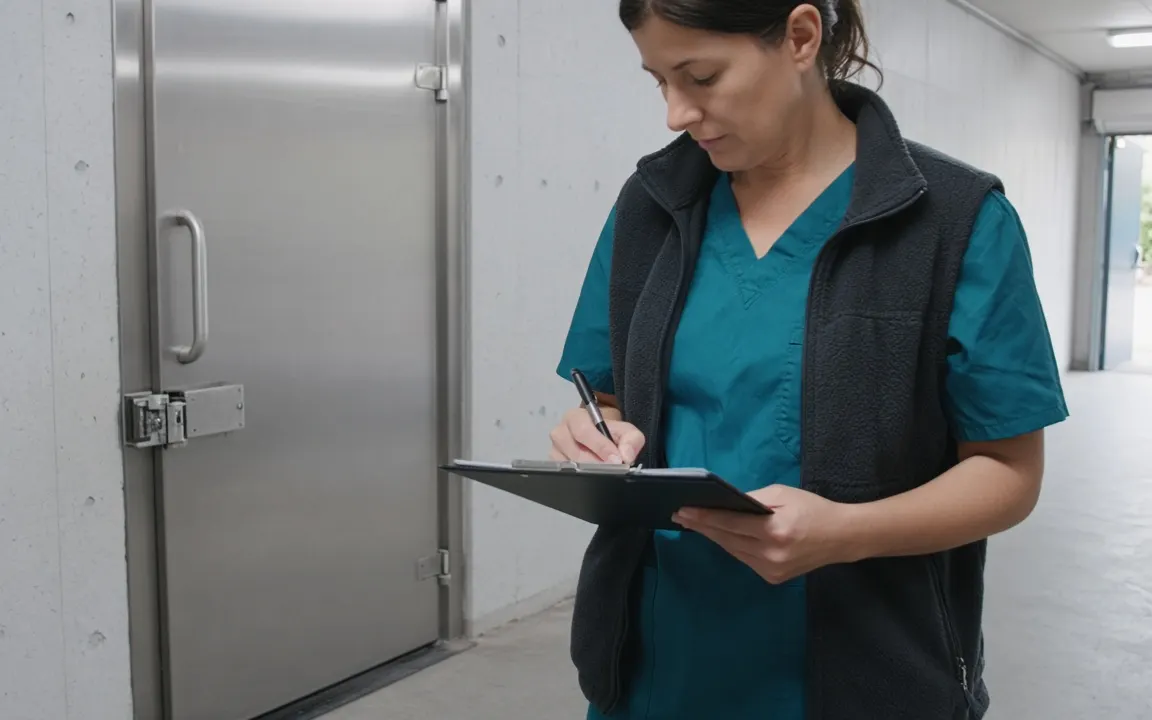
AZA Standard 2.5.3[2] asks for a dedicated area to store cadavers before and after necropsy. In practice that means a cooler used only for this purpose, with a log sheet on the door. Anyone who moves a body writes down the time, the ID and their initials.
If disease is suspected, the process pauses here. The vet contacts the state veterinarian, and the body may have to go to a specific lab under specific packaging rules. Our article on wildlife carcass disposal rules covers the common reportable diseases.
Where wildlife is involved, the USGS National Wildlife Health Center investigates mortality events and accepts specimens, and the CDC's bird flu situation summary is the quickest check on the human-health picture before staff handle a sick bird.
The exam
Where does the necropsy happen, and who does it?
It depends on the institution's size and the animal's. A board-certified veterinary pathologist on staff is rare; Denver Zoo is one of the few institutions[3] accredited by AZA that employ one. Most rely on their clinical vet for a gross exam and send tissues to an outside pathologist, or send the whole body to a university or state diagnostic lab.
Very large animals are usually examined where they died or in a service yard, because moving an elephant or giraffe intact is hard. That has an aftercare consequence: the body may be sectioned during necropsy, which actually makes some cremation routes easier. Tell the crematory in advance if the remains will arrive in several parts.
Exotic species make up a meaningful share of pathology work even outside zoos. At the University of Tokyo's veterinary pathology service, exotic animals were 20.5%[4] of necropsy cases over fifteen years, so many labs have seen more unusual species than you might expect.
The underlying study of University of Tokyo necropsy cases is open to read and gives a sense of how varied that caseload is.
After a death in your collection, how often is there a necropsy before aftercare?
Tap an answer to vote and see how others answered. Anonymous.
What stays behind
What does the lab keep, and does it affect the ashes?
Nearly every necropsy keeps small tissue samples in fixative for histology, and many keep frozen samples for later testing or a biobank. Some cases keep much more: a skeleton for a museum, a skin for education, organs for a research study, or gametes for a species survival plan.
Small samples make no practical difference to the ashes. Ash is mostly bone, typically 3-5% of body weight[5], so removing soft tissue barely changes the weight you receive. Removing the skeleton is different: if the bones go to a collection, there will be very little ash left, and the team should know that before anyone promises an urn.
By our estimate, a 1,100 lb animal cremated whole would return roughly 38.5 lb[6] of remains, with a plausible range of 33 to 55 lb. Our private versus communal article explains which type of cremation gets you that animal's own ashes. Large-animal chambers are unevenly spread, so look at our locations pages before the lab releases the body.
| Retained by the lab | Effect on ashes | Record to keep |
|---|---|---|
| Histology and frozen samples | Negligible | Accession number and sample list |
| Organs for a research study | Minor | Recipient, study and transfer date |
| Skull only | Noticeably less ash | Collection catalog number |
| Full skeleton | Very little or none | Museum or collection transfer record |
The ashes weight estimator gives a starting figure for a whole animal. Reduce your expectations if bone is being retained.
The step that goes wrong
How do you make sure the remains are released for cremation?
Write it on the submission form, and confirm it by email. Many labs dispose of remains after the exam as standard practice, by incineration or tissue digestion, often cheaply: one US diagnostic lab reported digestion at about 25 cents a pound against 75 cents for incineration[7]. If your team wants ashes, the lab needs to know before it starts.
- State that the remains are to be released to a named crematory, not disposed of.
- Give the crematory's contact and the transport arrangement.
- Ask how long the lab can hold the remains after the exam.
- Ask whether retained tissue will be disposed of separately, and how.
- Request a release note that repeats your records ID.
If you don't need ashes, lab disposal is a sound, responsible choice. Euthanized animals must be kept away from scavengers: since 2003[8], US euthanasia drug labels have required disposal by deep burial, incineration or another approved method. A diagnostic lab's incinerator or digester meets that easily. Our services overview compares lab disposal with cremation and digestion.

Free tool
Aftercare options compared
Compare private, communal and water cremation with burial on cost, timing and what comes home.
Finishing
How do you close the file once aftercare is done?
Put four documents together: your original death record, the custody log, the necropsy report and the cremation or disposal certificate. Add a note of any retained items and where they went. That packet is what an inspector, a donor or a future researcher will ask for, and it takes ten minutes to assemble if every step was logged.
How do you keep chain-of-custody records for remains?
Tap an answer to vote and see how others answered. Anonymous.
Timelines vary a lot. Gross findings may be ready in a day, histology in a few weeks, and some specialist tests in months. Don't hold the cremation for the final report unless the pathologist asks; once released, aftercare can go ahead. Our article on what happens during cremation picks up from there, and the transport and logistics guide covers moving the remains from the lab. When you're ready, tell us where the necropsy is happening and we'll reply with providers nearby.

Reader polls
What would you choose?
Vote anonymously and see how other readers answered. The results are live counts from people who visit this site, so they show real opinions, not a scientific sample.
After a death in your collection, how often is there a necropsy before aftercare?
Tap an answer to vote and see how others answered. Anonymous.
How do you keep chain-of-custody records for remains?
Tap an answer to vote and see how others answered. Anonymous.
When did you (or will you) decide on aftercare?
Tap an answer to vote and see how others answered. Anonymous.


Questions people ask
Does every zoo animal get a necropsy?
In AZA-accredited institutions, the standard is that deceased animals are necropsied to find the cause of death, with histopathology at the vet's discretion. Mass mortality events may be sampled rather than examined individually. Non-accredited sanctuaries set their own policies, though many follow the same practice.
Can an animal still be cremated individually after necropsy?
Yes. Necropsy doesn't prevent individual cremation. The remains are released to the crematory, usually bagged and labelled, and cremated alone. The only difference is that small tissue samples stay with the lab, which has almost no effect on the ashes you receive.
How long after death can a necropsy be done?
Sooner is always better, and chilling the body quickly extends the useful window. Most pathologists prefer to examine within a day or two of death with the body refrigerated, not frozen. Ask your pathologist for their preference and build it into your mortality plan.
What if the lab has already disposed of the remains?
Unfortunately, lab incineration or digestion can't be reversed. If this happens, ask the lab for its disposal record for your files, and consider a memorial that doesn't depend on ashes, such as a planting or plaque. Then add the release request to your submission template so it doesn't happen again.
Who pays for the necropsy and the cremation?
Usually the institution, through separate invoices: the lab bills for the exam and any disposal, and the crematory bills for transport and cremation. Some state labs charge reduced fees for cases of public health interest. Ask both for written prices so finance can match them to the animal's record.


Sources and our estimates
- [1] AZA accreditation Standard 2.5.1 says deceased zoo animals should be necropsied to find the cause of death, with all deceased animals (or a sample from a mass mortality) given a gross necropsy supported by histopathology at veterinary discretion. Association of Zoos and Aquariums - 2023 Accreditation Standards & Related Policies (Standard 2.5 Necropsy), as filed in Skagit County public record, 2023.
- [2] AZA Standard 2.5.3 requires cadavers to be kept in a dedicated storage area before and after necropsy and remains to be disposed of under local and federal law. Association of Zoos and Aquariums - 2023 Accreditation Standards & Related Policies (Standard 2.5 Necropsy), as filed in Skagit County public record, 2023.
- [3] Denver Zoo is among only a few AZA-accredited institutions with a board-certified veterinary pathologist on staff; its deceased animals may go to an onsite 'Biofacts' teaching collection or the Denver Museum of Nature & Science. Denver Zoo Conservation Alliance - Life After Death: A Look into DZCA's Unique Pathology Program, 2024.
- [4] At the University of Tokyo, exotic animals made up 20.5% of necropsy cases in 2006-2020, and the median age at death of necropsied dogs rose from 2 years (1903-1914) to 10 years. Nakayama H et al. Chronological transition of necropsy cases of animals in Tokyo, Japan. J Vet Med Sci, 2023 (PMID 36385043), 2023.
- [5] Embrace notes cremated remains typically weigh about 3-5% of the pet's original body weight. Embrace Pet Insurance - Bury or Cremate Your Dog? Costs, Pros & Cons, 2025.
- [6] A 1,100 lb horse would be expected to return roughly 38.5 lb of cremated remains (plausible range 33-55 lb). Our estimate: 1,100 lb x 3.5% (range 3%-5%). How we calculate.
- [7] A biodigester at the Wisconsin Veterinary Diagnostic Laboratory cost $900,000 and processes carcasses for about 25 cents per pound, versus about 75 cents per pound for incinerators. Extension Horses (eXtension national Cooperative Extension) - Horse Disposal Options, 2019, 2019.
- [8] Since 2003 the FDA has required euthanasia drug labels to warn that euthanized animals must be disposed of by deep burial, incineration or another approved method to keep scavenging wildlife from eating the carcass. Cornell Waste Management Institute & Penn State - Horse Mortality: Carcass Disposal Alternatives (2012), 2003.
Arrange aftercare once pathology is done
Tell us what you need and where you are. We'll reply by email with clear options and prices so you can decide in your own time.