Aftercare for zoo, sanctuary and rehab animals in Lee's Summit
A 2 lb raptor and a 1,500 lb bison need very different routes. This page covers necropsy access, capacity, disease rules and records for animals in and around Lee's Summit.
- From songbirds to hoofstock, sized honestly
- Records matched to your animal IDs
- Local weather and timing built into the plan
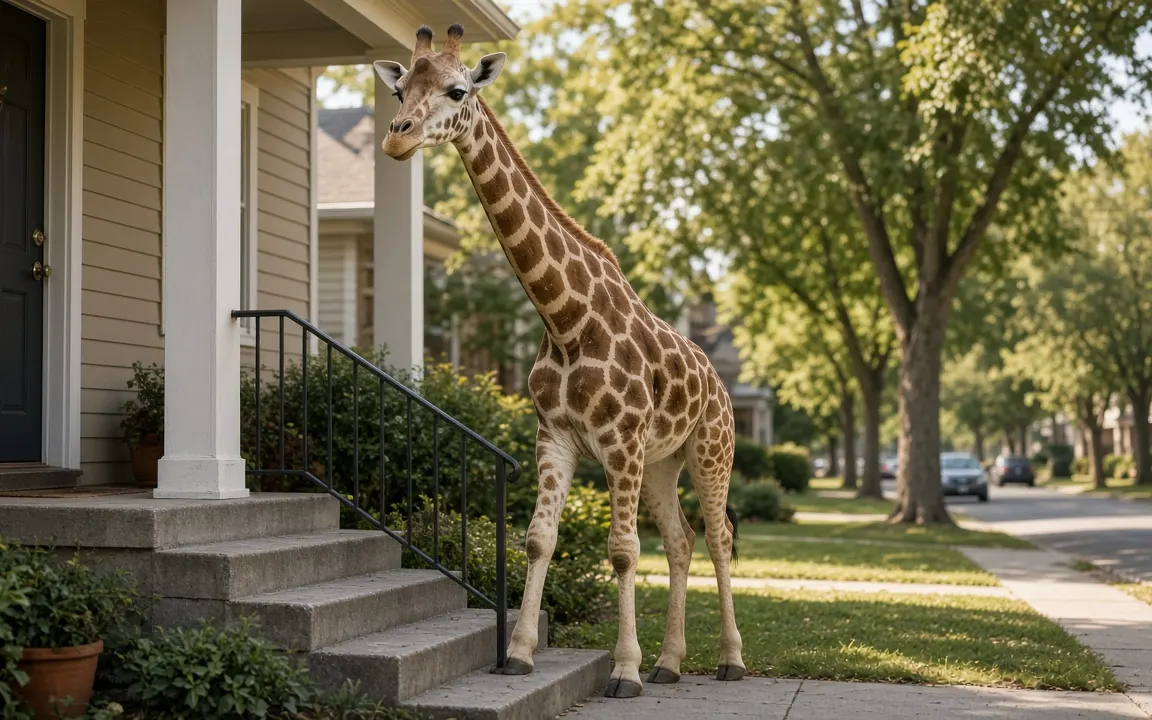
Lee's Summit, Missouri
What zoo and wildlife aftercare looks like in Lee's Summit
Much of the horse community around Lee's Summit boards at stables on the city's rural southern and eastern fringe, or keeps two or three horses on a few acres. If you board, ask your barn manager how losses were handled in the past. For people with a pair of goats or a donkey on acreage, a mixed-practice vet is often the quickest route to a trustworthy hauler.
Head south from Lee's Summit into Cass County, toward Pleasant Hill and Harrisonville, and the subdivisions give way to hay ground, cattle pasture and horse acreage. When a horse, steer or goat dies out there, owners usually have their vet confirm the death and then weigh on-farm burial where local rules permit, a hauler or rendering service, or a cremation facility serving the metro.
Licensed exhibitors, petting farms and small educational collections around Lee's Summit often have mixed animals and no in-house vet. Losses tend to be handled by whichever vet the owner uses for the farm animals, who may not know exotic species well. It's worth arranging, before a death, which vet will confirm it, who decides on a necropsy and where a reptile, a wallaby or a large bird can go afterwards. Those three answers cover most emergencies.
Lee's Summit is home to about 107,514 people, the 6th-largest of the 43 Missouri communities we cover. The nearest larger centre is Kansas City, about 16 miles (26 km) away, which is where some providers serving Lee's Summit are based.
Nearby, we also have local pages for Raytown (6 miles), Grandview (8 miles) and Blue Springs (9 miles), which can help if your vet or the provider you prefer is based there.
59.8%[1]
The NFDA projected Missouri's cremation rate at 59.8% for 2024.
$600-$1,000[2]
Cremating a 1,000-pound horse was reported to cost about $600-$1,000, depending on location and the price of propane.
3-5% of body weight[3]
Embrace notes cremated remains typically weigh about 3-5% of the pet's original body weight.
If a number here surprises you, the primary material is Extension Horses (eXtension national Cooperative Extension) and Embrace Pet Insurance; we only apply it to this.
Burial and cremation habits in Missouri
About 59.8%[1] of people who die in Missouri are cremated, so cremation is familiar without being universal. For public-facing institutions, that means a memorial for a well-known animal can take many forms, from a plaque over buried remains to a planting with a portion of ashes. Ask your keepers and your visitors what feels right; local custom gives you room either way.
The Missouri figure comes from NFDA 2024 Cremation & Burial Report state projections (via Occasional Sage) (2024). It describes people, not pets, so read it as a sign of local attitudes rather than a pet statistic.
How the seasons in Lee's Summit change aftercare logistics
A large animal that freezes solid is hard to work with. A pathologist may need days to thaw it before a necropsy can begin, and a crematory may not be able to position or section it. If a big animal dies outdoors in Lee's Summit during January, February and December, move it under cover and into a chilled space the same day if you can, rather than letting nature freeze it for you.
Winter in Lee's Summit can bring waterfowl die-offs and cold-stressed wildlife to rehabilitators, and bird deaths during avian influenza season may need testing before disposal. Keep suspect birds bagged, chilled and separate from other remains, wear protective equipment and call your state wildlife agency or animal health office before sending them anywhere. Your provider should know the current protocol, but the agency sets it.

How providers near Lee's Summit price large and exotic animals
Chamber size quietly shapes the bill. Large animal units are commonly built for about a 1,500 lb load[4], and by our estimate a 1,100 lb animal uses about 73% of that [5], so it's cremated alone. Anything heavier may need sectioning and several loads, each adding time and labor. Ask providers in Lee's Summit to quote the whole job, not a price per load.
The full price table by size is on our Missouri page, and the services page explains what each option includes.

Free tool
Cremation cost calculator
Estimate a realistic price range for your pet's size, location and the type of cremation.
Disposal, disease and permit rules in Missouri
For zoo and wildlife animals, rules come from several directions at once: disposal deadlines written for livestock, disease rules that follow outbreaks rather than borders, wildlife permits and, for accredited institutions, their own standards. The notes below cover what usually applies in Missouri. Species under federal or international protection add their own conditions, which your compliance lead should own.
Missouri keeps an official directory of local governments; use it to reach the county or city office that covers Lee's Summit.
We keep Missouri's burial and scattering rules in one place: the Missouri rules summary. Before a home burial in Lee's Summit, also ask the city whether local ordinances add anything.
When an animal in your care dies: step by step
- Take a moment. If you keep an exotic animal privately, the loss can be as hard as any, and nothing has to happen in the next hour.
- Call your exotic-animal vet so they can certify the death, and ask if a necropsy makes sense, particularly when other animals share the enclosure.
- Keep the body cool and away from other animals and scavengers.
- Check any permit issued for the species; a few require you to notify the agency that granted it.
- Contact a provider whose equipment suits the species and its size, or else ask us for options.
- Choose individual cremation if you want ashes back, and ask for a certificate naming the species.
Ways Lee's Summit teams mark the loss of an animal
From December into February the ground around Lee's Summit is often frozen solid, and even a backhoe struggles; March thaw then leaves pastures soft enough to swallow a trailer's wheels. Figure out now where a truck could reach your barn in either season. In a July heat wave, don't let a large animal's body sit past midday; a tarp for shade buys a little time.
Compare every option on our services page, or compare your instinct with the poll results, the planning tools turn your pet's details into figures, read our guides and latest articles. More local pages: Independence, O'Fallon, Columbia and St. Louis, the Missouri overview and every city in the United States.

Reader polls
What would you choose?
Vote anonymously and see how other readers answered. The results are live counts from people who visit this site, so they show real opinions, not a scientific sample.
When a long-time animal dies, what support do the keepers get?
Tap an answer to vote and see how others answered. Anonymous.
For your largest animals, what's the hardest part of aftercare?
Tap an answer to vote and see how others answered. Anonymous.
If you had to decide today, which aftercare would you choose for your pet?
Tap an answer to vote and see how others answered. Anonymous.

Free tools to help you plan
Cremation cost calculator
Estimate a realistic price range for your pet's size, location and the type of cremation.

Livestock mortality planner
Plan disposal capacity and costs for farm losses, from one animal to a herd.

Ashes weight estimator
See roughly how much ash to expect back, by species and body weight.
Questions people ask
Where are the providers that serve Lee's Summit actually based?
Some are local, and some run from Kansas City, about 16 miles away. That is normal for a city this size. What matters is the collection time they quote for Lee's Summit and whether the drive is priced into the total, so ask both up front.
How do Missouri attitudes to cremation compare?
NFDA 2024 Cremation & Burial Report state projections (via Occasional Sage) (2024) puts the Missouri human cremation rate at about 59.8%[1]. We show it on the Lee's Summit page because pet aftercare choices tend to track it: where cremation is normal for people, communal and private pet cremation are both easy to find.
Does the Lee's Summit climate change what I should do first?
Only the timing. In July, with highs near 88°F, cool the body and book collection the same day. In January, February and December, when lows sit below freezing, a home burial may have to wait for a thaw, so cremation with ashes returned keeps your options open.
Which nearby towns can I compare with Lee's Summit?
The closest communities we cover are Raytown (about 6 miles), Grandview (about 8 miles) and Blue Springs (about 9 miles). Providers based in those places often serve Lee's Summit too. Ask each one for a written total that includes collection, so the distance is priced in.
Is water cremation an option for zoo and wildlife animals?
Sometimes. Alkaline hydrolysis, also called aquamation or tissue digestion, is offered by some pet providers and used by some university labs for large animals. At one university lab it cost roughly a third of incineration per pound [7]. Lab digesters usually don't return remains, while pet aquamation services return bone ash much like cremation. Ask which kind you're being offered.
Can a zoo animal be cremated after a necropsy?
Yes, and it's common. The remains may be incomplete because tissues are kept for histology, and some institutions retain the skeleton or skin for collections. Tell the lab before the necropsy that you want ashes returned, and put it on the submission form, so the remains are released to a crematory rather than disposed of at the lab.


Sources and our estimates
- [1] The NFDA projected Missouri's cremation rate at 59.8% for 2024. NFDA 2024 Cremation & Burial Report state projections (via Occasional Sage), 2024.
- [2] Cremating a 1,000-pound horse was reported to cost about $600-$1,000, depending on location and the price of propane. Extension Horses (eXtension national Cooperative Extension) - Horse Disposal Options, 2019, 2019.
- [3] Embrace notes cremated remains typically weigh about 3-5% of the pet's original body weight. Embrace Pet Insurance - Bury or Cremate Your Dog? Costs, Pros & Cons, 2025.
- [4] An animal incinerator sized for agricultural and animal-control use holds up to 1,500 lb per load with a maximum burn rate of 250 lb per hour (manufacturer specification). B&L Cremation Systems (manufacturer) - BLI-1500 Animal Incinerator specifications.
- [5] A 1,100 lb horse uses about 73% of a 1,500 lb animal incinerator load, so large-animal units generally cremate one horse at a time. Our estimate: 1,100 / 1,500 x 100. How we calculate.
- [6] Horse rendering costs about $0.14 per pound and composting about $0.23 per pound, both well below incineration at $0.75 per pound, and composting is comparable to a biodigester at $0.25 per pound. Our estimate: $275 / 1,200 lb (composting); $137.50 / 1,000 lb (rendering); $0.25 and $0.75 per lb from extension. How we calculate.
- [7] A biodigester at the Wisconsin Veterinary Diagnostic Laboratory cost $900,000 and processes carcasses for about 25 cents per pound, versus about 75 cents per pound for incinerators. Extension Horses (eXtension national Cooperative Extension) - Horse Disposal Options, 2019, 2019.
Tell us the species, weight and location
Tell us what you need and where you are. We'll reply by email with clear options and prices so you can decide in your own time.